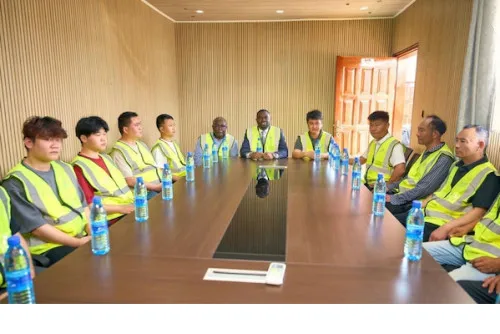
The Yicheng pharmaceutical complex project, located in Meyo on the Yaoundé-Nsimalen highway, is entering a crucial phase with the arrival of over 30 Chinese engineers. On March 3, 2026, Idriss Confiance Mbe, CEO of Yicheng Pharmaceutical Group Fabrication Co. Ltd, welcomed this delegation responsible for overseeing the final works of the first phase of this infrastructure, representing a total investment of FCFA 530 billion.
Their main mission is to supervise the finishing touches, install and calibrate industrial equipment, and prepare for the gradual commissioning of technical installations. Idriss Confiance Mbe set an ambitious goal for these engineers: to complete their mission in three months, emphasizing the importance of this step for the realization of this structuring project for the Cameroonian pharmaceutical industry.
According to project officials, the first phase, valued at FCFA 30 billion, is nearly 60% complete. The main objective of the complex is to locally produce a wide range of medicines, thereby strengthening the pharmaceutical autonomy of Cameroon and Central Africa. Ultimately, the factory aims to reduce dependence on imports and limit the circulation of counterfeit medicines in the region.
This project is part of a context in which the local pharmaceutical industry remains marginal, covering only about 5% of the national market for medicines and medical consumables, while 95% of demand is met by imports. Purchases of pharmaceutical products from abroad have increased, rising from FCFA 69.5 billion in 2010 to nearly FCFA 170 billion in 2024, placing increased pressure on the country's foreign exchange reserves.
Several structural constraints hinder the sector's growth, including high production costs, aging equipment, competition from medicines from informal channels, and a tax system deemed "suffocating". The Yicheng project represents a major industrial test, the success of which will depend on the ability to complete the work on time, install the equipment, and transform the investment into effective production capacity. The goal is to provide citizens with quality medicines, manufactured locally, and to combat the circulation of counterfeit pharmaceutical products. The completion of the work by the Chinese engineers is expected to pave the way for another major industrial project in the region.