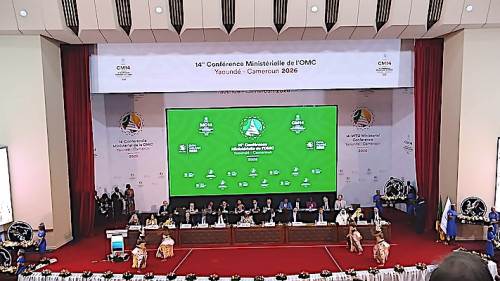
The 14th Ministerial Conference of the World Trade Organization (WTO), held in Yaoundé, focuses on the sensitive issue of the moratorium on electronic transmissions. This mechanism, in effect since 1998, prohibits states from imposing customs duties on cross-border digital flows, and its future is now a source of tension between major trading powers and developing countries.
The United States, supported by countries such as Japan, Australia, and Switzerland, is advocating for the perpetuation of this moratorium. They believe that the absence of customs duties promotes clarity for businesses and consumers, reduces transaction costs, and stimulates the growth of digital services, particularly for SMEs engaged in international trade. In contrast, India is openly questioning a further extension, considering it necessary to re-examine the issue.
The issue goes far beyond dematerialized cultural content. Electronic transmissions encompass a wide range of activities, including downloaded software, cloud services used by businesses, digital services sold internationally, software updates, online training, and certain telemedicine applications.
While proponents of the moratorium highlight the fluidity of trade it allows, many Southern countries are concerned about its budgetary cost. With the increasing digitalization of the economy, these governments fear being deprived of a potential source of revenue, in a context of high budgetary tensions. However, a 2023 OECD study nuances this impact, estimating the average shortfall at 0.68% of total customs revenue, or about 0.1% of total government revenue. The organization also points out that, in many cases, this loss could be offset by an increase in VAT revenue on imports of digital services.
For Cameroon and other African economies, the challenge is twofold: maintaining access to digital tools, essential for the transformation of businesses, while ensuring tax resources adapted to new economic models. Taxing electronic flows could increase access to the cloud and e-learning for SMEs, while the absence of appropriate taxation could create an imbalance to the detriment of countries importing digital services.
The ACP group of countries favors an intermediate solution: maintaining the moratorium until the next ministerial conference, in order to continue discussions on the tax interests of developing countries. The outcome of the debates remains uncertain, especially as decisions at the WTO are taken by consensus, and a single country can block an agreement. The issue of electronic transmissions could therefore serve as leverage in other trade negotiations. The Yaoundé conference highlights the need for African countries to strike a balance between access to digital services, integration into global trade, and fiscal sovereignty.
Alongside discussions on digital taxation, the Yaoundé conference is an opportunity to debate the reform of the WTO, a pressing issue in the face of changes in world trade. Proposals are also on the table for the creation of a Committee on Digital Trade, aimed at modernizing trade governance in the age of artificial intelligence and digital platforms.