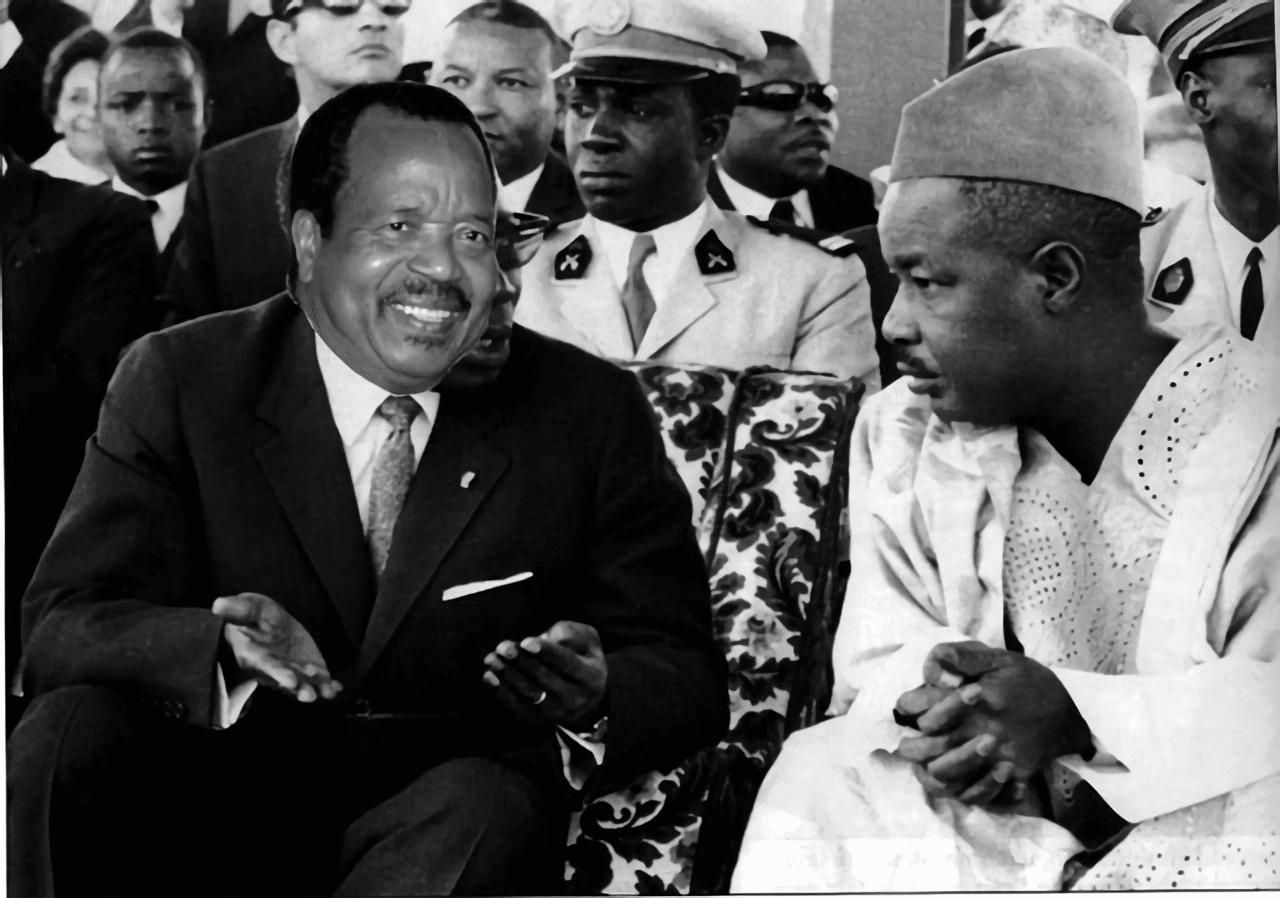
In a recent analysis, Ousmanou Magadji, an observer of the Cameroonian political scene, offers a perspective on the reasons that led Ahmadou Ahidjo to appoint Paul Biya as his successor. According to Magadji, Ahidjo saw in Biya, a Beti, a "republican perspicacity" and the conviction that he would pursue a dynamic of national integration [cite: null]. This vision was based on the mixing of peoples and an inclusive administration.
Magadji's analysis explores the logic of assimilation often attributed to the Peuls, suggesting that Ahidjo would have liked to apply it on a national scale by choosing a non-Peul and non-Northern successor. He believed that Biya, as a Beti, would continue to promote national unity [cite: null].
However, once in power, Biya surrounded himself with people from his own ethnic group, adopting a more communitarian approach. According to Magadji, this orientation deeply disappointed Ahidjo, who felt betrayed in his hope to see the spirit of national unity endure [cite: null]. Ahidjo had bet on Biya, going so far as to ensure that he would not be challenged by the other ethnic groups of Cameroon.
The article also mentions the failed coup, suggesting that Ahidjo could have been involved, motivated by a feeling of betrayal and an African context conducive to coups. Ahidjo's exile and death in Senegal are presented as a consequence of this break and the power struggle with the Biya clan.
The author, presenting himself as Beti through his father, calls for a republican awareness in the face of the institutionalized tribalism that divides Cameroon. He calls for reflection on reciprocity and the accession to power of other ethnic groups, not as a requirement, but as a symbol of national integration.
This initial transfer of power, from Ahidjo to Biya, was seen as a strong gesture, carrying unity, transcending ethnic divisions. The article concludes by emphasizing that ceding power to a personality from another region or ethnic group should not be seen as a loss, but as a step towards a more inclusive and representative democracy. Ahmadou Ahidjo resigned from his position as president on November 4, 1982, and handed over his position to Paul Biya, who was then prime minister. Biya thus became the second president of the Republic of Cameroon on November 6, 1982.