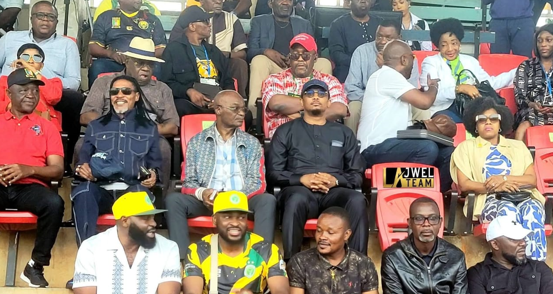
On March 24, 2026, as the Cameroon People's Democratic Movement (RDPC) celebrated its 41st anniversary across Cameroon, one absence was particularly noticeable in Bangou, in the West region: that of Datouo Théodore, President of the National Assembly. Indeed, Datouo Théodore, deputy of the constituency and influential figure of the party, was not present to share this event with his constituents, an unprecedented situation since the beginning of his mandate.
To compensate for his absence, Datouo Théodore sent a donation of 50 bags of rice intended for approximately 1,000 people gathered for the occasion. However, this gesture, far from appeasing spirits, sparked a wave of discontent and questions within the population.
The ceremony took place as planned, with the customary speeches and the announcement of the deputy-president's donation. Quickly, the calculation was made: 50 bags of rice for 1,000 people. A ratio that fueled conversations and speculation. Some residents openly expressed their skepticism, wondering if part of the donation had been diverted or if this limited quantity was really the only contribution considered by the President of the National Assembly.
While no official explanation was provided, a palpable sense of unease pervaded Bangou that day. Beyond the immediate disappointment, this absence revived deeper questions about Datouo Théodore's commitment to his constituency. Voices were raised to recall that, despite his political rise, the concrete benefits of his daily support remain barely perceptible to the inhabitants of Bangou.
Datouo Théodore's absence coincided with a meeting in Yaoundé, at the Palais de Verre Paul Biya, where he received Martin Chungong, Secretary General of the Inter-Parliamentary Union. An important international mission, no doubt, but one that was not enough to justify his absence in the eyes of his constituents, who would have preferred his physical presence to celebrate the 41st anniversary of the party that propelled him to the top.
The episode of the 50 bags of rice is likely to leave a lasting impression on Bangou. It symbolizes a growing gap between an elected official whose career is gaining momentum at the national level and a local base that aspires to concrete actions. The question now is whether, now that he holds the post of President of the National Assembly, Datouo Théodore will remember Bangou and be able to meet the expectations of his constituents.