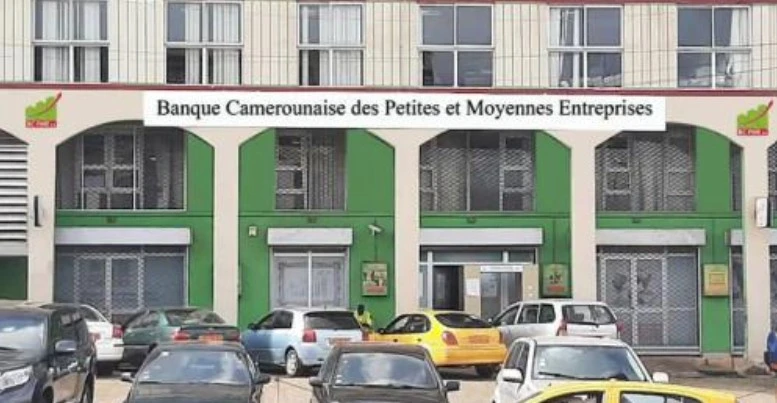
The Cameroonian SME Bank (BC-PME), established in 2015 with the ambition of facilitating access to credit for small businesses, is today raising questions about its effectiveness and management. After 11 years of existence, the institution has financed only 85 projects for a total amount of less than 2 billion FCFA, a record deemed "indecent" by some observers.
The genesis of the BC-PME dates back to the Ebolowa Agro-pastoral Show in 2011, where the Head of State promised its creation. The objective was to bridge the gap between Cameroonian SMEs and bank financing, a major challenge in a country where SMEs represent a significant part of the economic fabric. However, from its beginnings, the bank faced difficulties, including persistent illiquidity.
In 2018, the Banking Commission of Central Africa (COBAC), the financial regulator of the CEMAC zone, opened disciplinary proceedings against the BC-PME and its managers, resulting in the suspension of its general manager. This sanction, rare in the Cameroonian banking sector, reflects the governance and management problems that have hampered the institution's development.
Despite this mixed record and persistent criticism, the Ministry of Finance (MINFI) is considering entrusting the BC-PME with a key role in the import substitution strategy, a priority project of the government. This decision raises incomprehension and concern among some observers, such as economic journalist Albin Njilo, who denounces an "economic aberration". According to him, import substitution requires broader structural measures than simply financing local production.
A recapitalization of the BC-PME is also under consideration, a prospect that divides economic circles. Some fear that injecting new public funds into a structure that has already shown its limits would only be a waste of money. Others believe that a thorough reform of the bank, accompanied by a recapitalization, could allow it to finally fulfill its mission of supporting SMEs. In February 2026, the institution approved a capital increase of 40 billion FCFA, subject to authorization from COBAC. If approved, the bank's share capital will increase from 20 to 60 billion FCFA.
The question of responsibility for the difficulties encountered by the BC-PME also remains. How can a bank accumulate losses of 5 billion FCFA by financing so few projects without individual responsibilities being established? COBAC sanctioned the general manager, but have the "architects" of this fiasco been worried?
In the meantime, the future of the SME Bank remains uncertain, torn between the need to support the development of small businesses and doubts about its ability to do so effectively. The positive impact of the SME Bank is insignificant today, according to Albin Njilo.