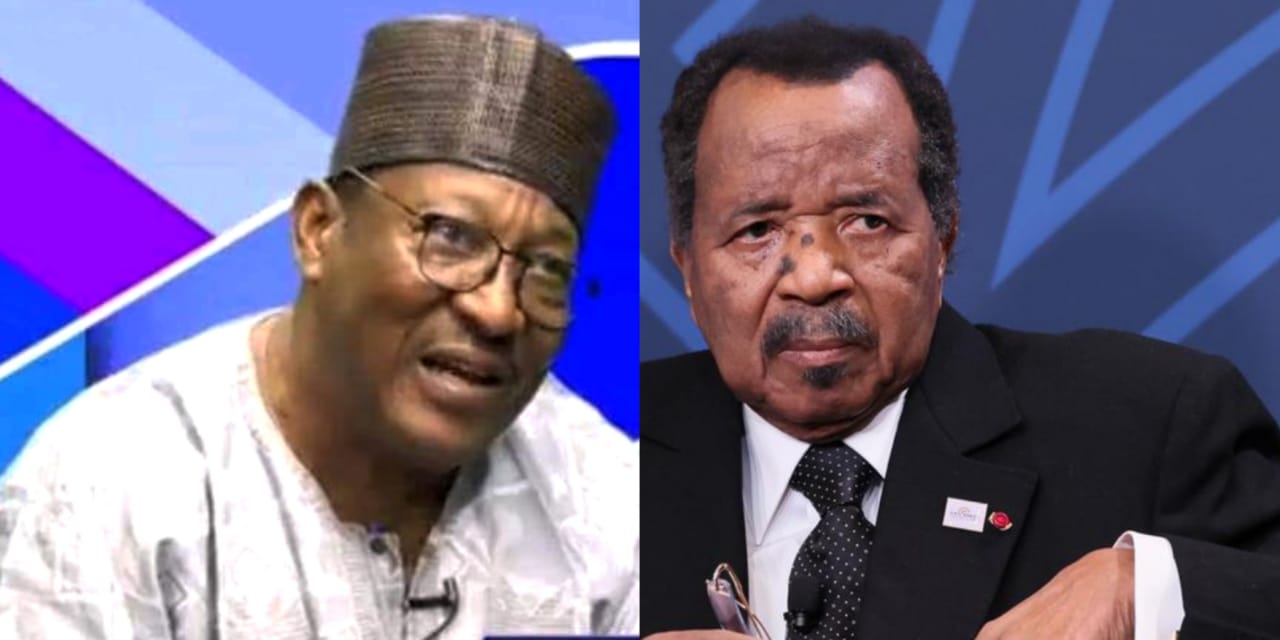
In a recent op-ed, Saint-Eloi Bidoung, a former activist of the Cameroon People's Democratic Movement (CPDM), strongly criticized President Paul Biya's long tenure in power and its consequences for Cameroonian society. He points out that Biya's candidacy in the October 2025 presidential election demonstrates his desire to remain president for life, after already 43 years at the head of state.
Bidoung denounces the persistent problems in Cameroon, despite government efforts: lack of adequate road infrastructure, water and electricity shortages, high unemployment, limited access to housing, and a lack of essential medicines in hospitals. He ironically comments on President Biya's implicit message, which he interprets as a determination to remain in power until death.
The former CPDM activist compares Cameroon's situation with that of other countries. He notes that the United States has had eight different presidents during the same period, and France, often cited as a democratic model by Cameroon, has had five. He deplores that in Cameroon, people born in 1982 have been unemployed for twenty years, despite their university degrees. Those who have found employment will be approaching retirement without having known any president other than Paul Biya.
Bidoung also criticizes the attitude of the regime's supporters, who present Paul Biya as the only possible choice, indispensable to Cameroon's survival. He recalls a statement by a law professor comparing Biya's "National Renewal" policy to Gorbachev's Perestroika in the USSR, pointing out that Russia has since had several free presidential elections. Even China, despite its own challenges in terms of political freedoms, has seen six changes of leadership in 43 years.
Faced with this situation, Saint-Eloi Bidoung satirically suggests bringing the Pope to Cameroon to give lessons in political alternation to the "sacred college of Cardinals in the Vatican". Bidoung's criticism highlights the challenges of longevity in power and its consequences for Cameroon's development and future. The challenges raised, such as youth unemployment and the lack of political alternation, remain major concerns for the Cameroonian population. The question of Paul Biya's succession, given his advanced age, remains a central topic in Cameroonian political debate.