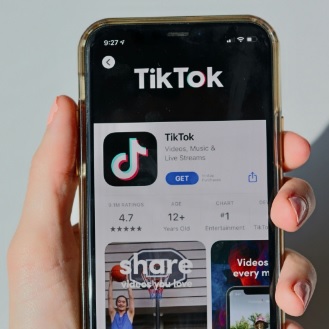
A Cameroonian woman residing in Belgium lost €10,000 in two months after falling victim to a romance scam orchestrated by an individual posing as a Cameroonian musician. The case came to light on TikTok, highlighting the predatory mechanisms at play in the digital age.
The victim, who has lived in Belgium for sixteen years, was contacted via TikTok by the scammer. Within a few weeks, he gained her trust by appealing to shared identity and aspirations. He then asked her to finance the rental of an apartment in Yaoundé, an investment of 840,000 FCFA (approximately €1,300) which she immediately sent. The relationship was built on a sense of shared cultural belonging and the musician's supposed fame.
The scammer then exploited the victim's vulnerability by asking her for €3,500 for a car, justifying this by his status as a "benguiste" (Cameroonian from abroad). The scam then escalated with requests for funding for a music video, an appearance on Trace Africa, and the purchase of a motorcycle taxi, bringing the total loss to €10,000 in just two months.
The algorithmic predator's strategy relies on using social networks as a hunting ground. After spotting his victim on TikTok, he implemented a three-phase manipulation: rapid seduction, creation of a sense of community belonging, and financial extraction under the guise of professional justifications. When the victim traveled to Yaoundé, the scammer kicked her out of the apartment and blocked her on WhatsApp, refusing to return the money.
This case illustrates the impact of digital trust on the economic security of diasporas. The victim intends to file a complaint in Cameroon, but the proliferation of such cases fuels mistrust between diasporas and local actors. Relational cybersecurity has become a major issue, and the lack of regulation of financial interactions on social networks exposes many people to similar predatory schemes.
The victim's decision to make her story public marks an important step in the fight against these scams. Social platforms and judicial authorities are now being called upon to implement protective measures to counter these practices, where love is used as a tool for financial extraction.
Several organizations and authorities warn against romance scams, emphasizing that scammers create fake profiles on social networks and dating apps to gain the trust of their victims and manipulate them financially. It is advisable never to send money to someone met online, to be wary of requests for funds for emergency situations, and to verify the person's identity by performing a reverse image search of their profile picture.