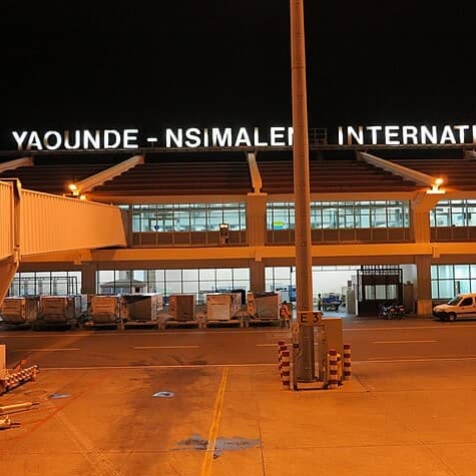
The Airport Anti-Traffic Unit (CAAT) at Yaoundé-Nsimalen has carried out two major seizures in quick succession, illustrating the increased vigilance of the Cameroonian customs authorities. The events took place at Yaoundé-Nsimalen airport.
A Cameroonian traveler, about to embark on a business trip to China, was apprehended in possession of 56,320 euros in cash, or approximately 36,943,498 FCFA. The sum was concealed in his cabin baggage, in violation of the customs code, which requires a declaration for any transport of currency exceeding a certain threshold.
In a separate operation, another passenger, disembarking from an international flight from Air France, was apprehended with 36 electronic cigarettes containing THC (Tetrahydrocannabinol), the main psychoactive compound in cannabis. The total weight of THC seized amounted to 1,940 grams.
Failure to comply with the customs declaration requirement is a regularly observed offense, punishable by seizure of funds and criminal prosecution. As for the presence of THC, it reflects an evolution in trafficking methods, with electronic cigarettes allowing for easier concealment. Cameroonian law is strict regarding cannabis, prohibiting its cultivation, possession, sale, trafficking and importation. Penalties can include imprisonment and heavy fines.
These successive seizures highlight the effectiveness of the CAAT in detecting illicit flows, whether undeclared capital or prohibited substances. They also underscore the need for constant adaptation in the face of the ingenuity of traffickers, who do not hesitate to resort to new concealment techniques. The use of electronic cigarettes for THC is an illustration of this.
These events occur in a context of increased efforts to combat drug trafficking in Cameroonian airports. In February 2026, customs authorities made a record seizure of nearly 2.5 tons of drugs at Douala airport, including cocaine from Germany and tramadol from India and South Sudan. The value of this seizure was estimated at approximately 50 billion FCFA, or 90 million US dollars.
These back-to-back operations raise the question of the actual scale of illicit flows passing through Cameroon, and the need to strengthen control mechanisms and international cooperation to effectively combat this trafficking.