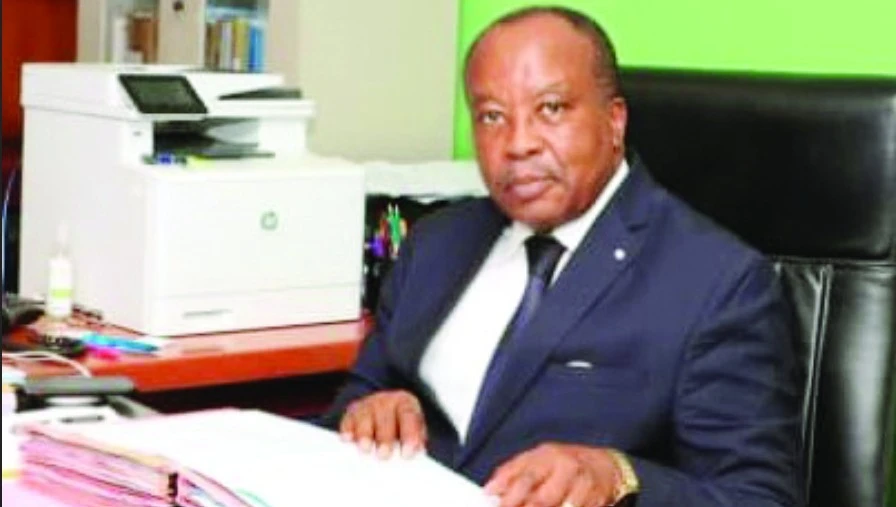
Professor Isaac Tamba, a renowned economist and former senior official at the Ministry of Economy, Planning and Regional Development (MINEPAT), has been appointed as Director of Cabinet to the President of Cameroon's National Assembly. This appointment marks his return to public service after a short retirement, generating considerable interest in academic and political circles.
With over 35 years of experience in both academia and the upper echelons of public administration, Isaac Tamba rose through the ranks at the Faculty of Economics and Management of the University of Yaounde II-Soa, ultimately becoming a Full Professor of Economics in Public Economy. His areas of expertise include public policy analysis, investment budgeting, public finance, debt management, inequality, poverty, and economic resilience. These subjects are central to the daily concerns of the Cameroonian population.
Over the years, Professor Tamba has led numerous research projects funded by leading African institutions such as CODESRIA, AERC, and IDRC. His work has been published in peer-reviewed scientific journals, earning him international recognition. His experience at MINEPAT, where he served as Director General of Economy and Public Investment Programming, allowed him to play a central role in guiding Cameroon's public spending and sectoral priorities.
The appointment of Isaac Tamba as Director of Cabinet of the National Assembly is seen as an opportunity to strengthen the economic expertise of this institution. The National Assembly plays a crucial role in reviewing and approving the state budget, as well as overseeing government action on the economic front. His expertise is expected to provide technical and rigorous insights on the complex economic issues that will be submitted to the President of the Assembly.
In a national economic context marked by major challenges, such as cooperation with the IMF and growing infrastructure needs, Isaac Tamba's expertise is considered a valuable asset. His role as an interface and strategic advisor could prove decisive in strengthening the economic and institutional role of the National Assembly. This appointment reflects a desire to mobilize academic and technical skills to serve Cameroonian institutions. It remains to be seen whether this expertise will be fully utilized to address the country's economic challenges.