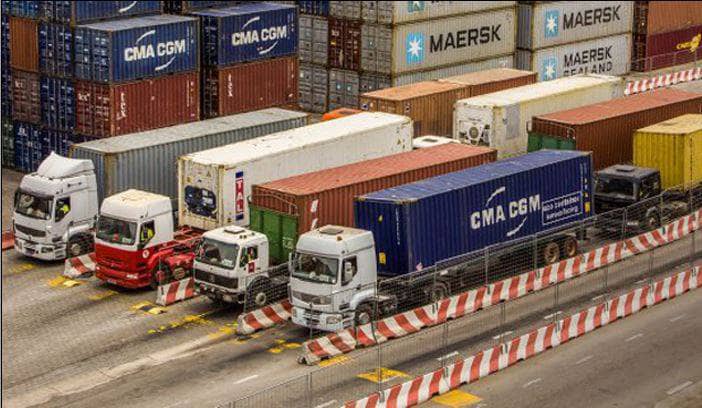
A 2024 survey by the Regional Observatory of Abnormal Practices (OPA) reveals that illegal payments and incomplete digitization at the port of Douala significantly increase the costs and delays in the passage of goods. According to the study, formalities can cost up to 180,000 FCFA per truck due to high payments for weighing and GPS.
The survey, conducted as part of the Support Program for the Governance of Regional and National Infrastructure in Central Africa (PAGIRN), funded by the European Union, aimed to identify bottlenecks in the customs clearance process and assess the performance of the institutions involved. The results show that despite the existence of digital platforms such as GUCE and CAMCIS, their adoption remains partial. Procedures such as the issuance of the Transit Title or the International Consignment Note (LVI) still require physical interactions, promoting illegal payments, denounced by 20 to 30% of licensed customs brokers.
In response to these findings, the port of Douala is urged to establish mechanisms for reporting illicit practices, such as toll-free numbers and anonymous platforms, and to strengthen internal controls and accountability of agents. The study also recommends accelerating the digitization of procedures.
According to Jean Yves Massouka, head of the trade facilitation unit, the port of Douala is finalizing its port information system, which is expected to be fully operational by September 2026. This system aims to centralize information from shipowners, consignees, and stevedores in a single module, accessible to all stakeholders, enabling a complete and effective digitization of the port platform. The establishment of the Cemac Joint Brigade is also a measure taken on the recommendation of the observatory.
The complete digitization of procedures should significantly reduce physical contact and, consequently, opportunities for corruption and illegal payments, thereby streamlining the transit of goods at the port of Douala.