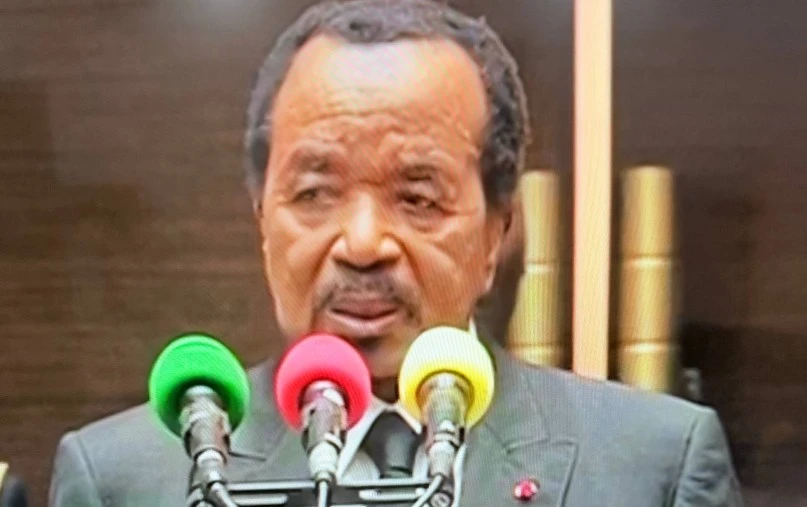
Pope Leo XIV's visit to Cameroon in April 2026 could offer a rare opportunity to see President Paul Biya without the usual control of state media. Scheduled from April 15 to 18, the papal visit will attract journalists from around the world. They will potentially have unprecedented access to the 93-year-old Cameroonian head of state during his public appearances.
For over a decade, Paul Biya's television appearances have been strictly orchestrated by CRTV, the national television channel. Fixed shots, scripted speeches, and formal handshakes are the norm. Access for independent journalists is limited, especially when it comes to filming the president in spontaneous movement.
However, international media coverage of the Pope's visit could change the game. Foreign media are not subject to the same constraints as CRTV. Their cameras and reporting teams could capture images of Paul Biya without the usual filter.
The question of President Biya's mobility has been a matter of public debate in Cameroon for years. Pope Leo XIV's visit could unintentionally provide a visual answer to this question, showing whether the head of state is still able to move easily.
Beyond the political aspect, Pope Leo XIV's visit is primarily a spiritual event. He will travel to Yaoundé, Douala, and Bamenda. Meetings with civil and religious authorities, Eucharistic celebrations, and messages focused on dialogue, justice, and peace are on the program. This visit comes amidst political and social tensions in Cameroon, notably due to the Anglophone crisis and post-election disputes. Archbishop Andrew Nkea, president of the National Episcopal Conference of Cameroon, emphasized that the Pope was coming as an "ambassador of peace and an apostle of reconciliation".
Pope Leo XIV will be the third sovereign pontiff to visit Cameroon, after John Paul II in 1985 and 1995, and Benedict XVI in 2009. His trip to Africa will also include Algeria, Angola, and Equatorial Guinea.
The Pope's visit is an important moment for the Catholic Church in Cameroon, where he is expected to address issues such as national reconciliation and attention to the most vulnerable.