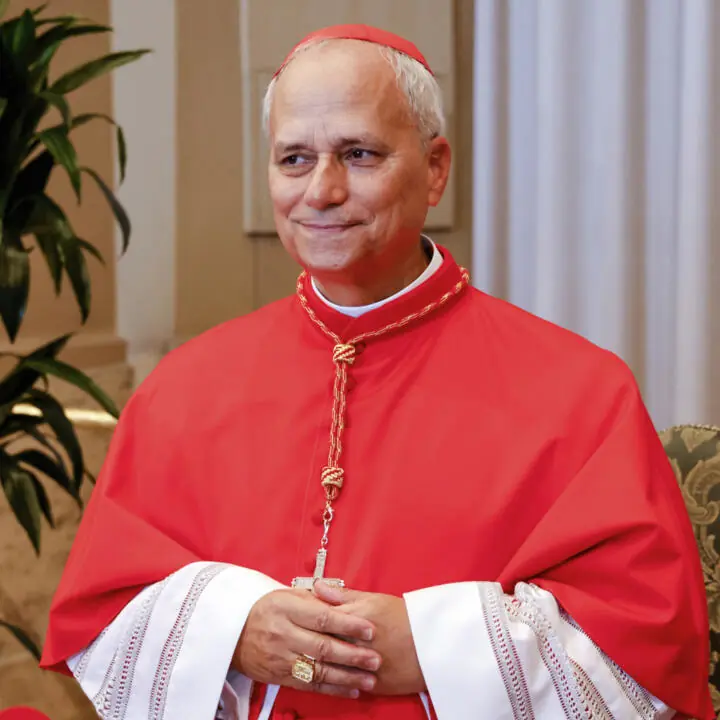
The bill to reintroduce the position of vice-president in Cameroon is generating heated debate. Jean de Dieu Momo, Minister Delegate to the Ministry of Justice, has spoken out to explain the reasons for this constitutional amendment. According to him, the main aim is to modernise the institutions and avoid any vacancy or paralysis of power if the president is unable to perform his duties.
"The creation of a Vice-President makes it possible to avoid any vacancy or paralysis if the President is unable to perform his duties," said Jean de Dieu Momo, stressing the importance of this reform for the continuity of the State.
The Minister stressed that this initiative is in line with a legal logic consistent with modern constitutional standards. He cited the examples of the United States and Nigeria, where the vice-president plays an essential role in the stability of executive power. For Jean de Dieu Momo, Cameroon is simply following a tried and tested constitutional tradition.
Beyond the simple continuity of power, Jean de Dieu Momo sees the creation of a post of vice-president as a way of streamlining the executive. Contrary to some preconceived ideas, he believes that this does not reinforce hyper-presidentialism, but allows for better internal organisation. He pointed out that, as in the United States and Angola, the vice-president can participate in government action and assist the president in coordinating public policy.
Another argument put forward by the Minister is the increased capacity for international representation of the State. He pointed out that in international law, representation of the State is essential for negotiating, signing agreements and engaging international responsibility. A constitutionally recognised vice-president could therefore represent Cameroon with full legal legitimacy, as is the case in the United States and Ghana.
Finally, Jean de Dieu Momo stressed that the creation of a post of vice-president is an instrument of constitutional stability. He recalled that institutional crises often arise from uncertainty about succession or interim arrangements, and that the vice-president offers a clear and predictable solution.
However, Jean de Dieu Momo was keen to warn against identity-based claims that could exploit this debate. In particular, he referred to arguments in favour of an English-speaking vice-president, seeing this as a risk of rewarding political delinquency and a threat to national unity. "Isn't it time for everyone to devote themselves to building a mosaic state, one and indivisible?" he asked.
For Jean de Dieu Momo, this reform does not change the presidential nature of the regime, but makes it more functional, more secure and better organised for a strong and well-structured state.