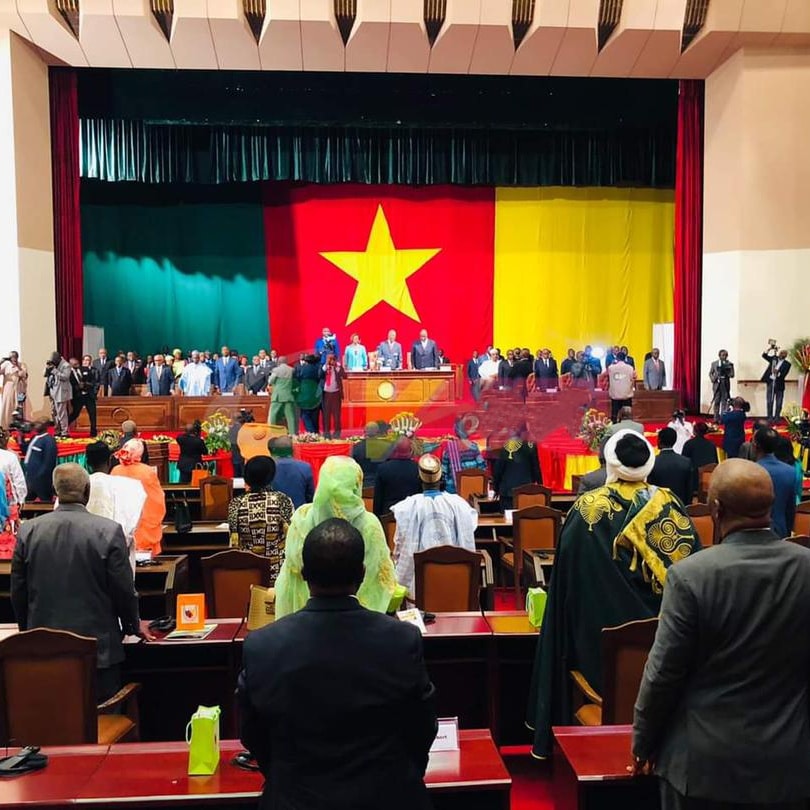
Cameroon is experiencing a period of profound institutional crisis, where illegitimacy affects the very foundations of the state. None of the major Cameroonian institutions function on a stable legal basis, from the executive to the legislature, including regional councils and the judicial system. This alarming situation stems from an accumulation of extended mandates and contested electoral processes.
The executive branch emerged from an election deemed fraudulent by international observers and local opposition. The National Assembly and the Senate, for their part, have their mandates extended without a clear constitutional basis, creating chronic illegitimacy. Recently, the National Assembly adopted a law extending the term of deputies until December 2026, a decision justified by the government due to budgetary and logistical constraints, as well as the need to repair the damage from the post-election crisis of 2025. This extension, the second after the one in 2025, has raised concerns about its constitutionality and political opportunism.
Regional councils are also affected, with their members having been elected by municipal councilors themselves in a situation of extension, thus spreading illegitimacy to all decentralized levels. In addition, the judicial system operates without the Superior Councils of the Magistracy, an essential body for the appointment and discipline of judges. After more than five years of waiting, a meeting of the Superior Council of the Magistracy was held in March 2026, raising hopes for a rebalancing of the judicial landscape.
The absence of democratic renewal is at the heart of this crisis. Expired mandates are not renewed and constitutional transition mechanisms are circumvented, in a strategy of maintaining power that avoids any electoral confrontation. This situation is exacerbated by the interdependence of powers, where an illegitimate executive appoints officials without parliamentary control, and deputies in an irregular situation vote on the laws that organize the following elections.
In the short term, this institutional illegitimacy paralyzes economic reforms and deters international investors. In the long term, the accumulation of extensions makes a return to normal operation increasingly unlikely, plunging the country into a constitutional gray area where the political succession will be played out without consensual rules. The crucial question is whether we can still speak of the rule of law when all institutions are maintained by self-validated extensions.