A document recently examined in connection with the Epstein case cites a speech by George Soros in which he calls Cameroon "one of the most corrupt regimes in Africa".
The document in question is a speech given by the Hungarian-American billionaire at the Paul H. Nitze School of Advanced International Studies in Washington. It was published in The American Prospect magazine on June 4, 2003, and emailed by Sophia Swire. The identity of the recipient of this email remains unknown.
In the speech, Soros, founder of the Open Society Foundations, stated that the war in Iraq was not conducive to building open societies in other countries. He added that the pursuit of allies and votes at the United Nations relegated the internal conditions of certain countries to the background.
Soros specifically cited Russia, Pakistan, the Central Asian republics, Angola and Cameroon as examples of corrupt regimes. He criticized the idea of invading Iraq to establish democracy there, calling it a sham perceived as such by the rest of the world.
He also expressed his desire to see regime change in countries such as Zimbabwe and Turkmenistan, and called Muammar Gaddafi a "dangerous troublemaker in Africa".
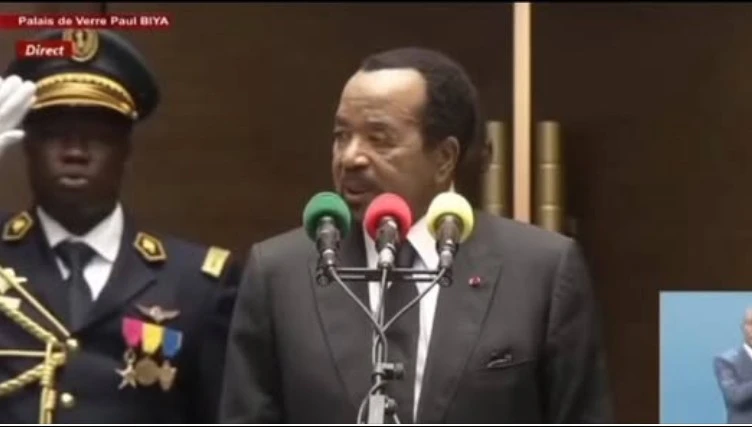
The article points out that Cameroon was led by Paul Biya for 21 years at the time of Soros' speech. It also recalls that Cameroon was ranked the most corrupt country in the world by Transparency International in 1998 and 1999.
Cameroon continues to struggle against corruption. In 2025, Transparency International gave the country a score of 26 out of 100 on its Corruption Perceptions Index, ranking it 142nd out of 180 countries. This score indicates a high perception of corruption in the public sector. The National Anti-Corruption Commission (CONAC) processed nearly 90% of the complaints received in 2025 and plans to strengthen the legal and institutional framework for combating corruption in 2026.