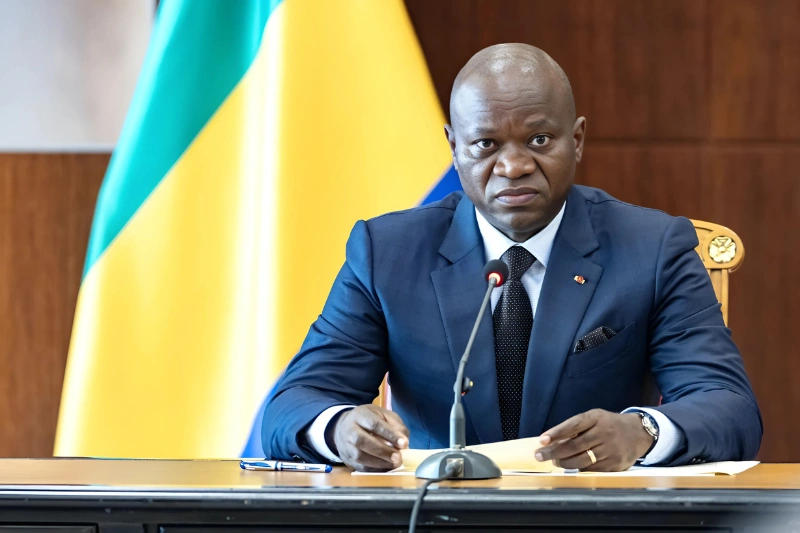
Gabon is intensifying its efforts to conclude a new economic agreement with the International Monetary Fund (IMF). Gabonese President Brice Clotaire Oligui Nguema has instructed his government to accelerate negotiations with the international financial institution, setting a deadline of the end of May 2026 for reaching an agreement.
This presidential directive was communicated following the Council of Ministers meeting on February 26, 2026, where the country's economic situation was closely examined. President Nguema emphasized the strategic necessity of this agreement with the IMF, considering it an essential guarantee of credibility to strengthen the confidence of Gabon's financial and technical partners.
An IMF mission visited Gabon from February 25 to March 6, 2026, to assess the country's economic situation. This mission, led by Aliona Cebotari, met with key Gabonese economic officials to collect data and discuss the government's policy priorities and reform plans. Discussions focused on strengthening governance, transparency of public finances, and improving the living conditions of Gabonese citizens.
Gabon officially submitted a program request to the IMF, as announced by an institution spokesperson on March 11, 2026. This step could play a decisive role in stabilizing the country's finances and strengthening financial transparency. Investors and rating agencies believe that an IMF program is essential to restore confidence, despite persistent concerns regarding debt transparency and the implementation of difficult reforms.
President Oligui Nguema insisted that this partnership with the IMF would not come at the expense of national interests. He defined a negotiation framework based on four pillars: protecting priority projects validated by the people, protecting vulnerable households, streamlining public spending, and responsible public debt management.
The IMF welcomed Gabon's efforts in terms of transparency, including the introduction of a new integrated public finance management system. However, the institution stressed the importance of maintaining prudent fiscal and financial policies to ensure macroeconomic stability in Gabon and the region. Discussions between Gabon and the IMF are expected to continue in the coming weeks, including at the upcoming IMF Spring Meetings.
Gabon's public debt stands between 70% and 75% of GDP, a level above the 70% community threshold set by CEMAC. Obtaining international financial approval is therefore crucial for Libreville to carry out its infrastructure projects while managing its debt.