


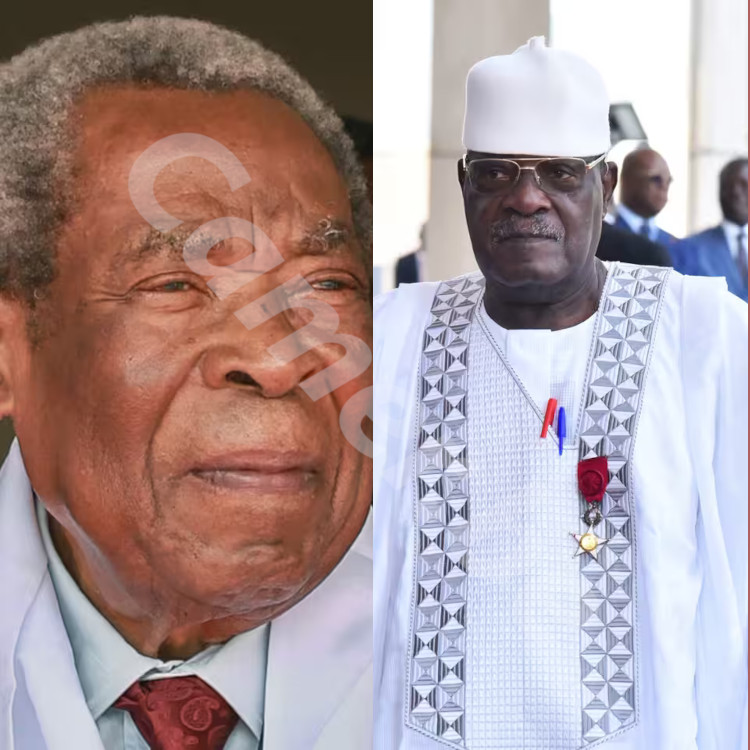
A major shift has occurred in Cameroon's political landscape with Cavayé Yéguié Djibril stepping down from his position as President of the National Assembly, concluding a 32-year tenure. This transition marks the end of an era for one of the country's most influential figures.
Cavayé Yéguié Djibril, who had held the office of President of the National Assembly since 1992, has been succeeded by Théodore Datouo, a deputy from the Western Region. This change in leadership, which took place on March 17, 2026, represents a significant, albeit carefully managed, transition within the Cameroonian political system.
Cavayé Yéguié Djibril's long tenure was marked by unwavering loyalty to President Paul Biya and the CPDM (Cameroon People's Democratic Movement). His departure raises questions about the future of his political network and collaborators, particularly Boukar Abdourahim, his long-serving Chief of Staff.
Boukar Abdourahim, nicknamed "the Iranian," was a key figure in the National Assembly, often cited for his influence and access to resources. His future is now uncertain, as is that of other members of the Cavayé network, who once benefited from their proximity to power.
The end of the Cavayé Yéguié Djibril era opens a new phase for the National Assembly and Cameroon. The arrival of Théodore Datouo, who oversaw the construction of the new headquarters of the National Assembly, symbolizes both modernization and political continuity. Civil society is closely observing this transition, hoping that the National Assembly will become a more independent and effective legislative body.
Cavayé Yéguié Djibril, born on February 1, 1940, has had a long and distinguished political career. Before becoming President of the National Assembly, he was a physical education teacher, traditional chief of Mada, and a member of the CPDM political bureau. His career reflects his deep roots in the Cameroonian political landscape.
Théodore Datouo, the new President of the National Assembly, faces high expectations. His ability to lead the Assembly independently and respond to the aspirations of the Cameroonian people will be decisive for the future of the institution.
The departure of Cavayé Yéguié Djibril marks a turning point in Cameroon's political history. It remains to be seen how this transition will influence the dynamics of power and the evolution of the country in the years to come.
On March 18, 2026, Théodore Datouo was elected President of the National Assembly, ending Cavaye Yeguié Djibril's 34-year term.


