A delegation from the Football-7 Federation of the Democratic Republic of Congo (DRC) has been in Cameroon since February 17, 2026, to study and draw inspiration from the organization and practices of the Cameroonian Football-7 Association (ACF7). Led by its president, Lorenzo Kizombe, the Congolese delegation aims to improve the structure and development of football-7 in their country by building on the Cameroonian experience, which is considered more advanced.
This initiative is part of the Congolese Football-7 Federation's desire to further professionalize and structure this sport in the DRC. Football-7, a variation of traditional football, is gaining popularity across the African continent, offering an accessible and adapted alternative to available infrastructure. The DRC's approach demonstrates recognition of the work accomplished by ACF7 and its role as a model in Central Africa.
The exchanges between the two federations began upon the Congolese delegation's arrival in Douala, with an initial working meeting followed by a joint press conference. The Secretary-General of the DRC Federation, Guy-Phily Nsa Mputu, emphasized the importance of this visit to learn about Cameroonian methods and share experiences. President Kizombe, for his part, stressed the need to learn from countries more advanced in the practice of football-7.
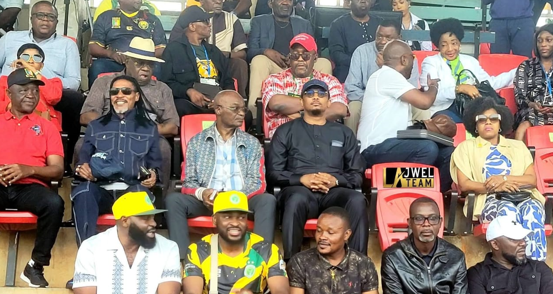
The visit program includes theoretical and practical working sessions. The Congolese delegation attended the third day of the zonal championship at the Stade de la Réunification annex in Douala, which allowed them to observe the organization of football-7 competitions on the ground. These practical observations are essential to understanding the challenges and best practices in managing sporting events of this type.
Beyond the sporting aspect, this collaboration between the two federations highlights the importance of exchanges and expertise sharing between African countries for the development of sport. By drawing inspiration from working models, federations can accelerate their own development and contribute to the growth of football-7 on the continent.
The press conference was also an opportunity for ACF7 to present its new partner, Switch, a structure dedicated to entertainment. This partnership, worth US$3,000 (approximately CFAF 1.6 million) over one year, demonstrates the growing attractiveness of football-7 and its potential for economic development. The arrival of sponsors is a positive sign for the sustainability and professionalization of the discipline.
In conclusion, the visit of the Congolese delegation to Cameroon marks an important step in the development of football-7 in the DRC. By drawing inspiration from the Cameroonian model and establishing solid partnerships, the Congolese Federation is giving itself the means to structure and promote this sport in its country. This initiative illustrates the dynamic of cooperation and expertise sharing that drives African sport.