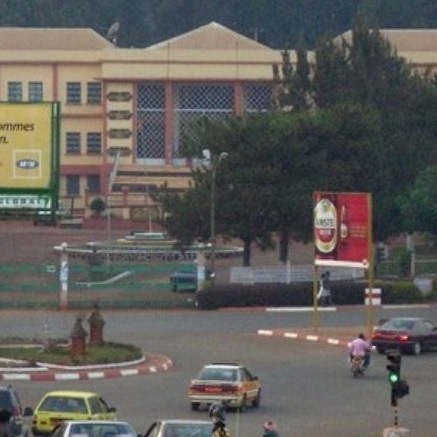
The Minister of Domains, Land Registry and Land Affairs, Henri EYEBE AYISSI, has cancelled the land title of the DJEUGA PALACE Hotel Company in Douala, owned by Member of Parliament Jean Claude FEUTHEU, following a request from the ATOU Consulting Firm. This decision, made public on February 2, 2026, is generating strong reactions in Cameroonian business circles.
The ATOU Firm, which initiated the request, has published an information note explaining the reasons for this cancellation. According to the firm, the 10,350 square meter plot of land, located in the heart of Douala at the Joss roundabout, actually belonged to the railway domain of the former National Railway Authority of Cameroon (REFERCAM) since 1926. In 2008, during the initial transaction, the site was questionably classified as a "national domain of the 2nd category", a classification implying that it had never been exploited by man, which is difficult to justify for land in the middle of the city.
In addition, Jean Claude FEUTHEU reportedly obtained a provisional concession of 5,314 square meters, later transformed into a definitive land title, but actually occupied 1.35 hectares, more than double the area granted. The acquisition of this land of more than one hectare was made for an amount of 29 million CFA francs, while its real value is estimated at 10 billion CFA francs.
The Minister of Domains has therefore ruled in favor of the ATOU Firm, acting to safeguard the residual assets of the former REGIFERCAM. This case has opposed the two parties since 2008. The cancellation of the land title raises questions about responsibilities and potential compensation, especially if the Djeuga Palace hotel is to be demolished.
The cancellation of land titles is a sensitive issue in Cameroon, especially when it concerns strategic areas or significant investments. Recent cancellations have raised questions about administrative competence and respect for legal procedures. The decision concerning Djeuga Palace comes in a context where the transparency and regularity of land transactions are increasingly scrutinized.