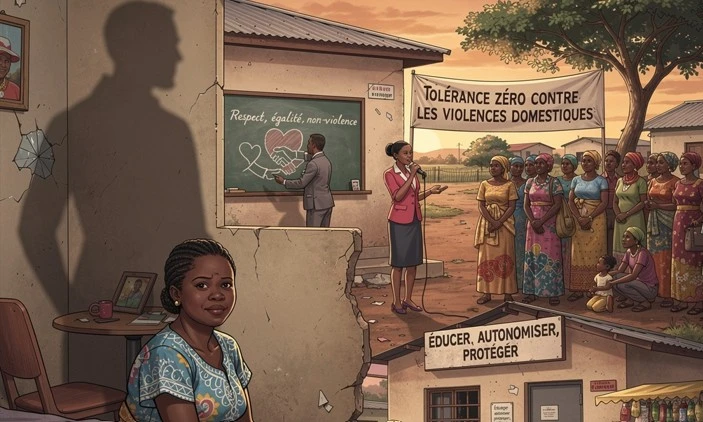
In Cameroon, domestic violence remains a major societal problem, affecting women, men, and children from all walks of life. Despite growing awareness, the phenomenon persists, fueled by deeply rooted social, economic, and cultural inequalities.
According to the Cameroon Demographic and Health Survey (EDS-MICS 2018) and an Afrobarometer dispatch published in 2024, approximately 43% of women aged 15 to 49 report having experienced at least one form of physical or sexual violence in their lifetime. Early marriages, which still affect 12% of girls under the age of 15, constitute another form of structural violence. Data on femicides, although fragmented, reveal a worrying increase, with 76 cases recorded in 2024 compared to 57 in 2023. It is important to note that these figures are likely underestimated due to the stigma and social pressure that deter victims from reporting abuse.
Domestic violence is not limited to physical assaults. It also encompasses emotional, psychological, and economic violence. One study reveals that 43.2% of women in unions have experienced domestic violence, and 56.4% have experienced at least one form of violence within the couple. Humiliating and devaluing words can also constitute a form of psychological violence, affecting both women and men.
While women are the primary victims of the most severe forms of domestic violence, it is crucial to recognize that men can also be victims of psychological, verbal, or economic violence. International studies suggest that 10 to 20% of men report having experienced domestic violence in some countries. However, male underreporting remains a challenge due to social norms and male pressure.
Faced with this reality, a multi-dimensional approach is needed. Prevention must begin in schools, with awareness of the consequences of domestic violence and non-violent conflict resolution. Accessible reporting mechanisms and awareness campaigns are essential to break the silence and encourage victims to seek help.
Combating domestic violence also requires clear criminalization of violence and stronger sanctions. Specific laws, restraining orders, and specialized courts can improve the protection of victims. However, criminal deterrence alone is not enough. It is imperative to address the root causes of violence, including education, women's economic empowerment, and the evolution of social norms.
Several organizations, such as UN Women and INTERSOS, are implementing support programs for victims, ranging from psychosocial assistance to economic empowerment. These initiatives aim to break the cycle of violence and provide victims with the tools they need to rebuild their lives. By also involving men in violence prevention, it is possible to transform mindsets and promote more egalitarian and respectful relationships. Zero tolerance for violence must be a collective priority to build a fairer and more balanced Cameroonian society.