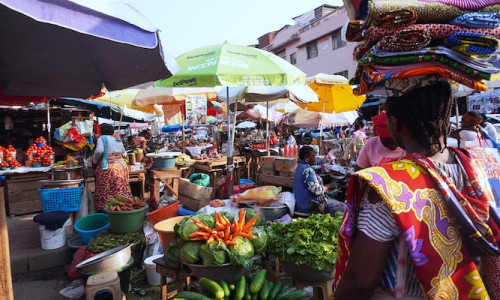
The Commission of the Central African Economic and Monetary Community (CEMAC) is undertaking a major initiative to improve data collection on informal cross-border trade. A regional workshop is being held in Douala from March 16 to 19, 2026, bringing together experts from the six member countries: Cameroon, Gabon, Congo, Chad, Central African Republic, and Equatorial Guinea. The main objective is to strengthen the capacities of national experts in data collection tools and monographic studies, in order to identify border crossing points, map trade flows, and assess import-export transactions carried out informally.
According to Marc Roland Lontchi, Director of Statistics at the CEMAC Commission, it is crucial to capitalize on information on the activities of small traders passing through land routes, in order to implement appropriate support policies. Informal cross-border trade represents a significant share of trade in the sub-region but still largely escapes official statistics, which hinders an accurate assessment of regional economic integration.
By structuring a harmonized monitoring system, CEMAC aims to bridge this information gap, thereby improving the understanding of trade flows and the design of support policies for small cross-border operators. For Cameroon, which shares 4,591 km of land borders with its neighbors, the issue is particularly strategic. Figures from the National Institute of Statistics (INS) in 2024 reveal a deficit balance of 50.72 billion FCFA in unregistered trade with neighboring countries.
The challenge for Yaoundé goes beyond improving data. It is about better understanding trade balances, controlling economic flows, and assessing income generated in border areas. Christelle Tchoua, representative of the INS of Cameroon, affirmed the country's willingness to support other nations in setting up a monitoring system.
The integration of informal cross-border trade into official statistics will enable States to more effectively guide their public policies. Better control of this trade could improve foreign trade statistics and refine the assessment of national wealth, in a context where the public finances of CEMAC countries remain under pressure. Beyond the figures, the goal is to provide States with a robust management tool to inform trade policies, support mechanisms for small traders, and border security strategies.