

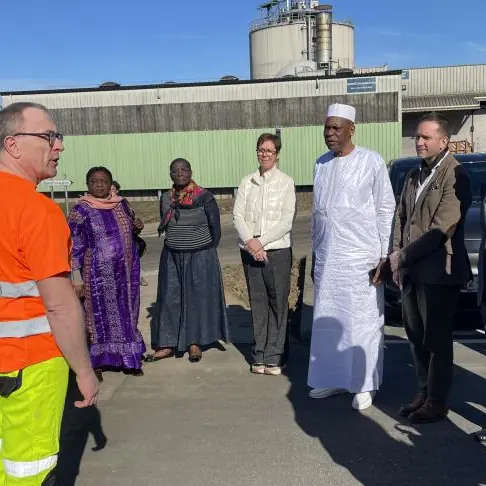
A delegation of Cameroonian parliamentarians visited Belgium to study the waste management model of IDELUX Environnement, a Belgian intermunicipal organization that transforms 96% of its waste into resources. The visit, which took place in Tenneville on Wednesday, March 4, was part of an exchange program organized by the bilateral section of the Inter-Parliamentary Union of Belgium-Cameroon. The aim was to examine Luxembourg's expertise in waste management, the circular economy, and energy transition, with a view to adapting it to the Cameroonian context.
The IDELUX model is based on a dense network of recycling centers, efficient selective collections, and high-performance treatment sites. The Cameroonian delegation was particularly impressed by the biomethanization process, which transforms organic waste into energy and natural fertilizer. This technology could prove particularly relevant for Cameroon, where the organic fraction represents a significant proportion of household waste.
Isabelle Michel, President of IDELUX Environnement, emphasized the importance of citizen involvement in the success of the Belgian model. "Our ambition is to show how a rural area can implement effective multi-channel management, with strong citizen involvement in sorting," she said. The Cameroonian parliamentarians took note of this message, aware that public awareness will be a key element for the success of such an initiative in Cameroon.
This visit allowed the Cameroonian elected officials to reflect on the feasibility of such a model in their country. The long-term challenge is to structure a complete waste recovery sector, create green jobs, and reduce environmental impact.
The crucial question remains how to adapt this Belgian model, designed for a rural Luxembourg area, to the urban and climatic realities of cities like Douala and Yaoundé, where waste management is a major challenge. Cameroon, facing rapid urbanization and increased waste production, is seeking sustainable solutions to improve waste collection, treatment, and recovery. Pollution from poor waste management leads to significant health and environmental risks.
The country produces around 3 million tons of municipal solid waste per year, much of which is inadequately managed, often through open burning. Initiatives are underway to develop a roadmap for comprehensive organic waste management and attract national and international investment in the sector. The visit of the Cameroonian delegation to Belgium demonstrates the country's willingness to draw inspiration from international best practices to meet this crucial challenge.
The complexity of the situation in Cameroon requires an integrated approach, combining investments in infrastructure, strengthening governance, public education, and community engagement.