


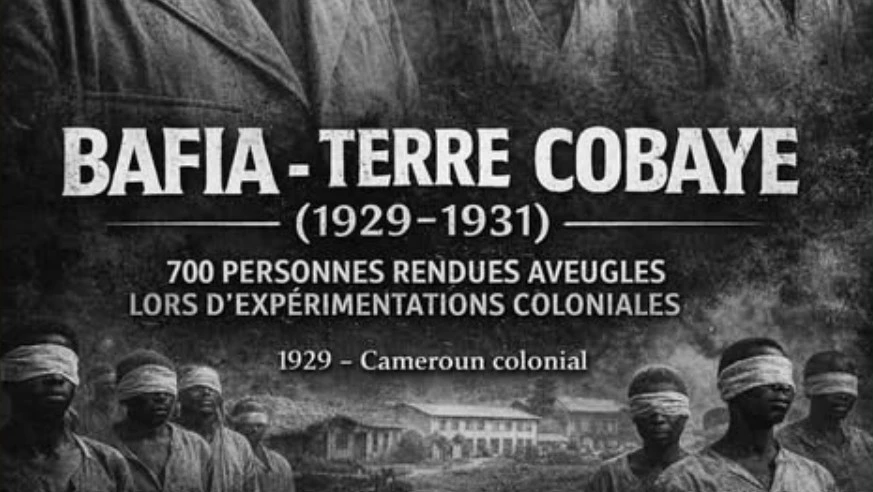
In 1929, a colonial medical campaign against sleeping sickness in Bafia turned into a tragedy, leaving nearly 700 people blind. This tragic event, long obscured, continues to haunt the collective memory and raises questions about the medical practices of the colonial era.
In the late 1920s, colonial authorities intensified their efforts to eradicate sleeping sickness, a devastating disease in Central Africa. Bafia, located in what is now the Centre region of Cameroon, became the scene of vast treatment campaigns led by colonial doctor Eugène Jamot.
However, an error in the administration of treatments reportedly had disastrous consequences. Nearly 700 inhabitants allegedly lost their sight as a result of injections given as part of these experiments. This tragedy plunged entire families into irreversible suffering, deeply marking the local population.
Despite the scale of the tragedy, this episode remained largely undocumented in official accounts of the colonial era. For many historians, it illustrates the potential abuses of medical practices carried out on local populations without sufficient safeguards. Colonial doctor Eugène Jamot implemented mobile and field medicine. In 1931, during the Paris Colonial Exhibition, his work was highlighted, but a few weeks later, he received a reprimand because of the Bafia affair.
The paradox is that, despite this tragedy, some medical establishments still bear the name of the colonial doctor involved in these health campaigns. This reality regularly fuels the debate on historical memory and how African societies approach their past. Eugène Jamot died on April 24, 1937.
The Bafia tragedy highlights a dark page in colonial medical history. Nearly a century later, the question of memory and recognition remains. Should African societies rewrite their history so that such tragedies are never forgotten?


