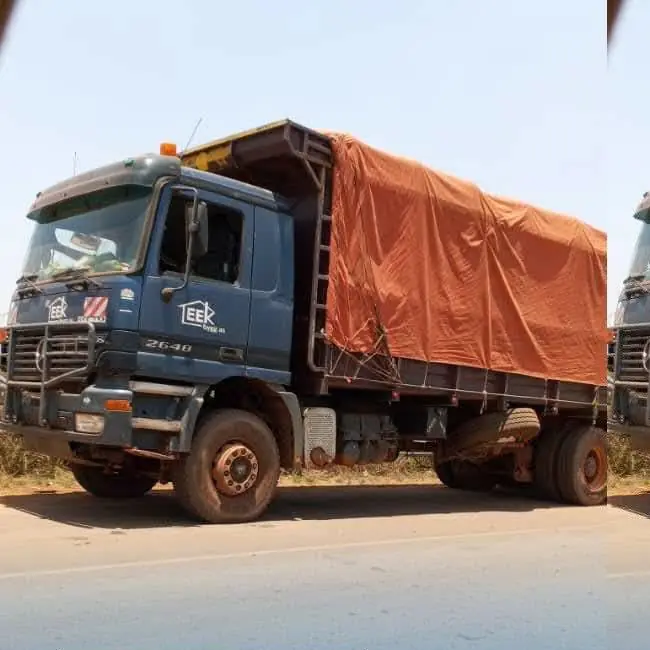
Cameroonian customs officials have made a record seizure of 50 tons of greisen, a strategic mineral, concealed in two trucks. The operation, conducted by the Mobile Customs Brigade of Bankim, took place on Sunday, March 22, 2026, on National Route 6, putting an end to a large-scale fraud attempt.
The two trucks, coming from Mayo-Darlé, were intercepted during a routine check. On board, the customs officers discovered 50 tons of greisen, a granitic rock particularly rich in cassiterite, the main tin ore. The cargo, belonging to a mining company, had no customs documents.
Greisen is a rock resulting from the transformation of granite by hydrothermal fluids. This rock is considered essential for the technology industry, as it contains not only cassiterite (tin ore), but also tungsten, molybdenum and niobium. These metals are essential in various sectors such as electronics, defense and renewable energies. The seized cargo contained an exceptionally high proportion of 50% cassiterite. Cassiterite is mainly used as a raw material for tin extraction and smelting. Tin is used in solders for electronics, in the production of corrosion-resistant alloys, in glass manufacturing and as a coating for other metals.
The unofficial destination of the trucks was China. The absence of an export declaration and certificate of care constitutes a serious customs offense. Cameroonian customs is intensifying its efforts to combat illegal mineral trafficking, and this seizure represents a blow to a well-organized fraudulent export network.
The origin of the minerals is in Mayo-Darlé, an area of artisanal and semi-industrial mining activity. The use of National Route 6 made it possible to avoid the usual border control posts, with the aim of transporting the cargo to a clandestine embarkation port. The fraud is based on the under-declaration or total absence of documents, with mining companies often outsourcing transport to intermediaries.
This seizure is a strong signal to mining operators and traffickers. For the Cameroonian State, each ton of cassiterite exported illegally represents a loss of tax revenue and mining royalties. Securing export channels is therefore a budgetary priority, and reinforced control is necessary to prevent Cameroon from continuing to lose part of its geological wealth.
The development of a responsible mining sector requires the certification of exports. Seizures like the one in Bankim provide valuable data for mapping traffic routes, but the absence of exemplary criminal penalties limits the structural impact of routine operations. Cameroonian customs is showing its determination, but the fight against fraudulent exports remains a long-term challenge.