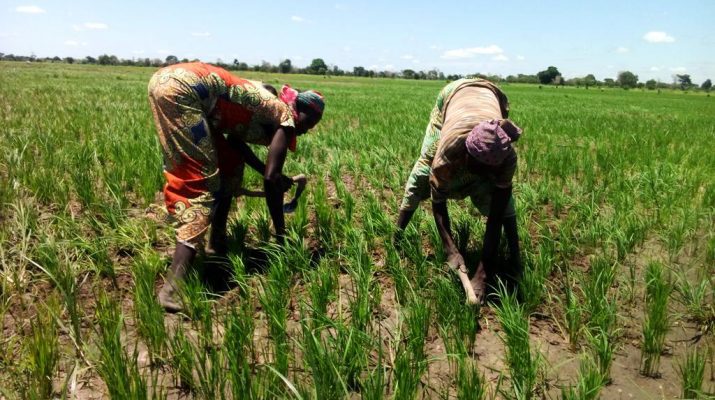
The Cameroonian government and the Israeli company Ekobell signed an agreement on March 6, 2026, for an investment of FCFA 98.4 billion (approximately €150 million) to develop rain-fed rice farming in the North and Adamawa regions. The project aims to develop 10,000 hectares of agricultural land and involve around 8,000 local producers.
The main goal is to increase paddy rice production by 46,700 tons over the next three years, equivalent to approximately 31,289 tons of milled rice. The targeted areas include Sirdjam and Pola in the North region, and Mbé in the Adamawa region. This additional production volume could represent nearly 18% of the current national production of high-quality milled rice.
This initiative is part of Cameroon's national rice sector development strategy, which aims to reach a production of 460,000 tons by 2027 and 750,000 tons by 2030. The government aims to achieve a self-sufficiency rate of 97%. In 2024, Cameroon imported FCFA 318.6 billion worth of rice, accounting for 6.4% of its total imports.
The project with Ekobell includes not only increased production but also improved operations for the collection, transportation, and processing of rice. It is expected to generate direct and indirect jobs in the agricultural, logistics, and industrial sectors.
Despite these efforts, challenges remain in achieving rice self-sufficiency, with national consumption estimated at 576,949 tons in 2020. Cameroon continues to invest in its rice sector to reduce its dependence on imports and ensure food security for its population.