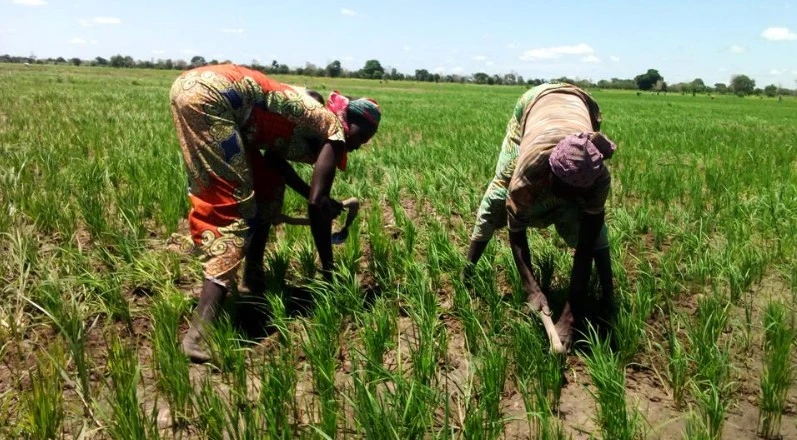
Cameroon has invested over FCFA 800 billion in local rice production since 2017, yet continues to import FCFA 340 billion worth annually. Meanwhile, Nigeria, with a smaller investment of FCFA 680 billion between 2022 and 2024, has successfully become one of Africa's leading rice producers for over 200 million people.
Nigeria now produces over 7 million tons of rice per year, thanks to a strategy combining investments, border closures to imports, and the involvement of its central bank, cooperatives, and industrialists. This approach has enabled Nigeria to achieve genuine food sovereignty.
In Cameroon, the situation is paradoxical. Despite the FCFA 800 billion invested, the country struggles to produce 250,000 tons of rice per year. The government, while funding local production, authorizes massive imports. In 2020, the Minister of Finance even granted a private operator the right to import 200,000 tons of rice duty-free. In 2019, imports had already reached 905,107 tons.
The Galim agropole in the Western region exemplifies the difficulties encountered. In 2012, FCFA 1.2 billion was invested in a rice husking plant in Bazingang, but ten years later, no machinery is operational. Additional funds have been allocated for electrical installations on a site that remains a ghost. Economic observers denounce the opacity in project management, which favors the misappropriation of funds. In 2013, the Galim agropole aimed to produce 3,500 tons of rice per year. However, in 2015, difficulties were reported, including the inability to raise the necessary funds for certain structures such as the storage plant.
Faced with this situation, voices are rising to challenge Ferdinand Ngoh Ngoh, Minister of State and Secretary General of the Presidency of the Republic (SGPR), who has oversight over all ministries. The future of Cameroonian rice production may depend on his decisions. On March 10, 2026, the Cameroonian government signed an agreement for FCFA 98.4 billion with the Israeli company Ekobell to develop 10,000 hectares of rain-fed rice cultivation in the northern regions, hoping to significantly increase cultivated areas and reduce dependence on imports. In December 2025, the government announced a subsidy of FCFA 9 billion to boost production at SEMRY and UNVDA from 2026.
Cameroon aims to triple its national rice production between 2024 and 2027, from 140,710 tons to 460,000 tons, with a target of 750,000 tons by 2030, corresponding to a self-sufficiency rate of 97%. However, achieving this ambitious goal remains a major challenge.
As of March 2026, a Chinese agricultural technician is contributing to increased rice production in Nigeria by adapting agricultural techniques to local conditions. Nigeria has seen successes through targeted investments and border closures, but faces challenges related to rising production costs and the need to stabilize food prices.