


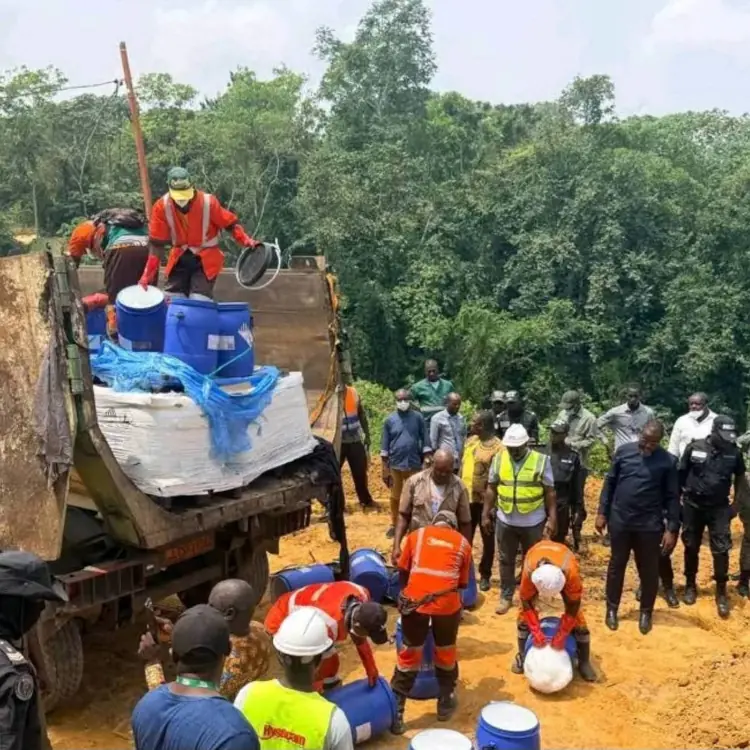
In Cameroon, a series of recent events raises questions about the use of drugs as a tool for institutional score-settling. The rapid incineration of seized drugs, targeted arrests within the police force, and the lack of clear answers fuel these concerns.
It all begins with a drug seizure with unclear details. The identity of the sender and the freight forwarder remain unknown. The order for incineration is given quickly, without transparency or the presence of journalists or cameras. The drugs are destroyed without allowing for a thorough investigation.
Twenty-four hours later, the head of the Littoral judicial police is arrested on drug-related charges. This coincidence raises questions: why not wait for the results of an investigation before destroying the evidence? This scenario is reminiscent of the arrest of the airport commissioner in similar circumstances, with drugs seized, drugs burned, and subsequent arrest.
In these cases, no arrests of alleged traffickers take place, and no public indictments are made. Only police officers are arrested, leading to questions about whether these seizures are real or instrumentalized. The rapid destruction of evidence makes any independent verification impossible.
Questions remain unanswered: who ordered the immediate incineration, and why such urgency? In a context where drugs are considered "democratized," the systematic destruction of seals is illogical, as seized drugs should be kept as evidence until the final judgment.
These arrests create a climate of fear within the police force, where officers fear being framed. Drugs become an easy-to-use motive, difficult to challenge and impossible to verify once the evidence is destroyed. The credibility of the General Directorate of National Security is at stake. These repeated drug cases raise questions: is the DGSN seeking to clean up its ranks or settle scores?
Several questions remain unanswered: who was the sender of the drugs, and why was the freight forwarder not investigated? Was the urgency to burn the drugs aimed at protecting someone or accusing someone else? How many other officers will fall victim to this convenient and unstoppable motive? These recent events highlight the persistent challenges related to the fight against drug trafficking and the need for increased transparency in judicial procedures in Cameroon.