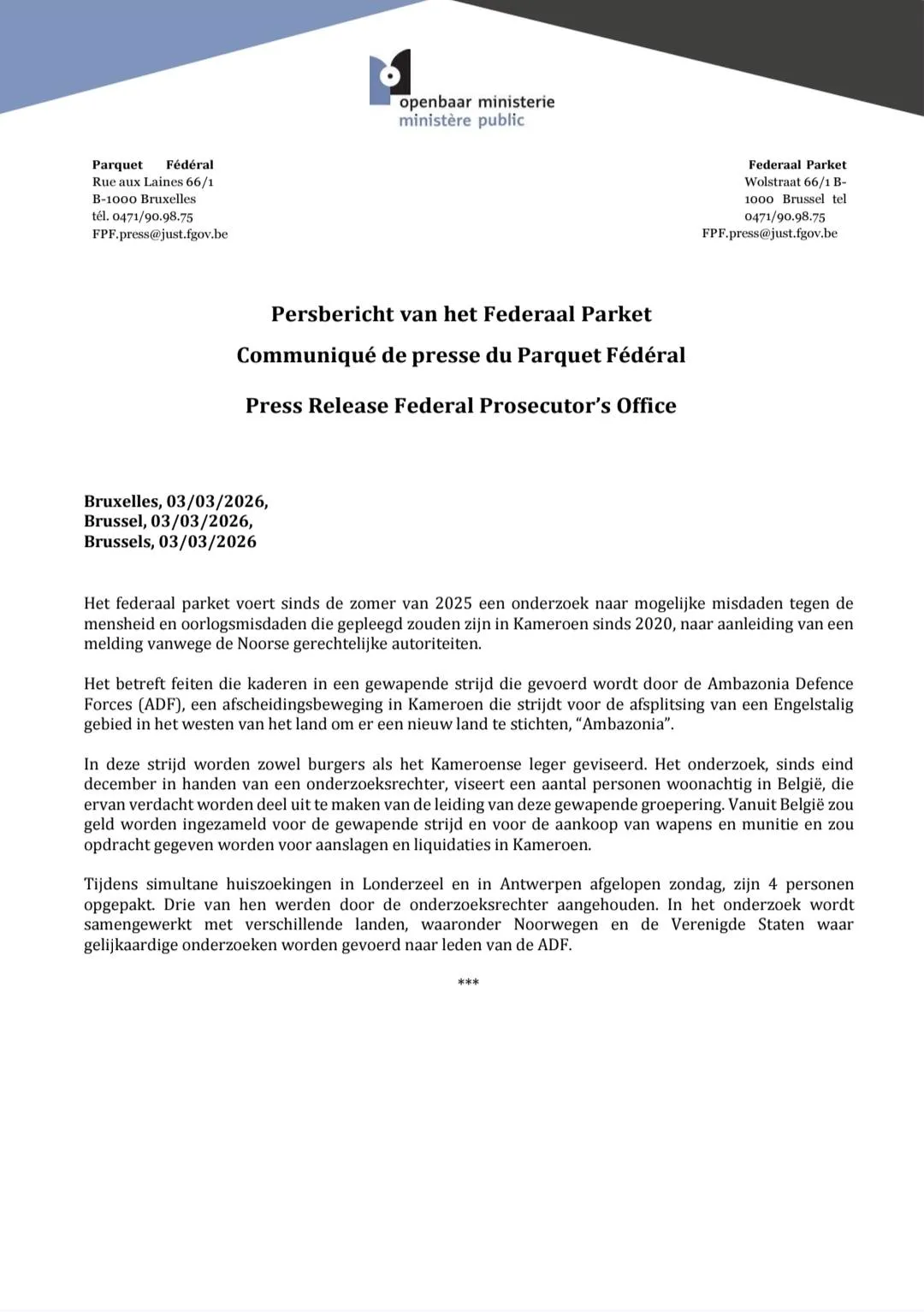
Cameroon is preparing to examine a draft constitutional revision during the parliamentary session of March 2026, in a tense post-election context [cite: source]. This revision comes after a contested presidential election in October 2025, where the incumbent president, Paul Biya, 92, was declared the winner by the Constitutional Council with 53.66% of the vote. His main opponent, Issa Tchiroma Bakary, garnered 35.19% of the votes but denounced massive fraud and claimed victory.
Post-election demonstrations erupted in several cities, including Douala, Bafoussam, and Garoua, pitting opposition supporters against law enforcement [cite: source]. The UN reported the deaths of 48 civilians and 3 gendarmes, as well as the arrest of more than 1,200 people [cite: source]. Issa Tchiroma Bakary has been living in exile in Gambia since then [cite: source].
According to L'Œil du Sahel, the National Assembly is expected to elect its bureau as early as the opening of the March 2026 session, an unusual procedure [cite: source]. This change aims to secure the body that controls the agenda and committees before the draft constitutional revision is examined [cite: source]. This maneuver is seen as a strategy of institutional lock-in by the executive [cite: source].
Cameroon faces institutional frailties, including the absence of solid constitutional safeguards, making the succession potentially chaotic [cite: source]. Long terms in office have often ended badly in other African countries, such as Libya, Gabon, and Chad [cite: source]. The country is also facing the Anglophone crisis since 2016, endemic corruption, and poverty affecting more than 55% of the population [cite: source].
The early election of the National Assembly's bureau is seen as an attempt to control the agenda and key positions [cite: source]. The presidential majority seeks to secure these levers before addressing a revision that could concern the vice-presidency, the Senate, decentralization, or the electoral calendar [cite: source].
In 2018, Maurice Kamto had already challenged the results of the presidential election and launched an electoral dispute before the Constitutional Council, followed by acts of civil disobedience [cite: source]. His appeals had failed, leading to the arrest and imprisonment of opponents [cite: source]. The Constitutional Council is regularly accused of collusion with the ruling power [cite: source].
Paul Biya, 92, is the oldest head of state in Africa, and 60% of young Cameroonians have only known him as president [cite: source]. In the absence of a designated successor, factions of the regime could vie for power [cite: source]. The army could also intervene to ensure the country's stability in case of uncertainty [cite: source].
Faced with speculation about his health, Paul Biya has stepped up his presence on social media, a strategy seen as artificial by many Internet users [cite: source]. The parliamentary session in March 2026 is crucial for Cameroon's institutional future, with the question of the legitimacy of a constitutional revision resulting from a contested election in the background [cite: source].
The constitutional revision is being prepared in a context of electoral contestation and institutional frailties. The challenge is whether this revision will adapt the state to future challenges or aim to lock in a system that has been in place for decades.