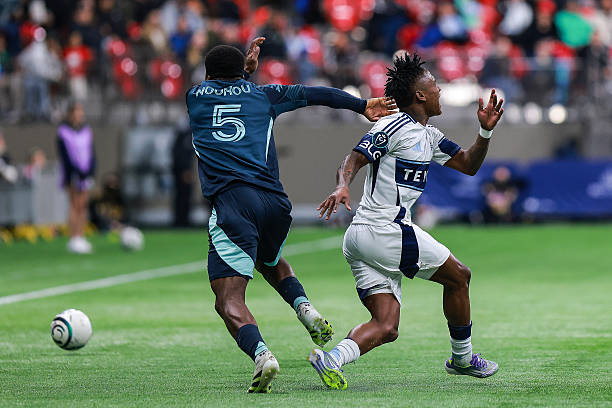
The Cameroonian government has submitted a bill to the National Assembly aimed at reforming and promoting physical and sports activities in the country. This bill, sponsored by the Minister of Sports and Physical Education, Pierre Ismaël Bidoung Mpkatt, aims to establish a "3rd generation" sports regulation.
The main objective is to ensure complementarity between internal sports law, that emanating from national sports federations, and international sports law. The proposed text revises Law N°2011/018 of July 15, 2011, and focuses on three major areas: the organization and development of physical and sports activities, the coordination of sports movement stakeholders, and the promotion of sports equipment.
Legal supervision is at the heart of concerns, as it has been perceived as an obstacle to the development of Cameroonian sport for several years. This situation has notably led to the extension of the renewal process of the governing bodies of civil sports federations, with football under provisional administration since 2013.
The bill provides for the creation of three advisory bodies for the coordination of physical and sports activities and crisis management: the National Council for Physical and Sports Activities, the National Anti-Doping Agency, and the National Commission for High-Level Sport. A Commission for Sports Degrees and Diplomas and Equivalence of Foreign Titles in Sports is also planned. The government thus wishes to provide solutions to sports disputes, by clearly defining this concept and excluding electoral disputes in particular.
The text emphasizes the professionalization of clubs, which will have to adopt one of the recognized forms of commercial companies (Sarl, SEM or SA). It also reinforces the importance of high-level sport and makes the teaching of Physical and Sports Education (PSE) compulsory from kindergarten to secondary school, as well as in vocational training establishments, both public and private. The practice of PSE is now considered a right, governed by the principles of Olympism.
In essence, Pierre Ismaël Bidoung Mpkatt, facing numerous crises linked to the renewal of the governing bodies of federations since 2012, seeks to establish a more solid legal framework before embarking on a new electoral phase. The National Assembly now has the responsibility of examining and adopting this bill.
The reform comes in a context where the government is seeking to modernize several aspects of Cameroonian society, including digital taxation.