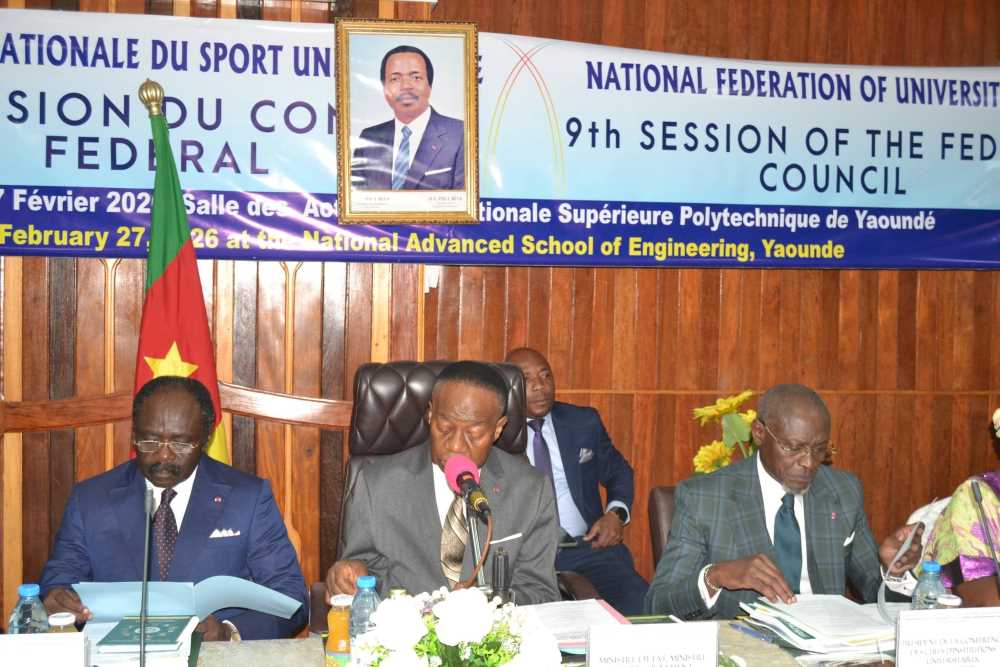
Faced with growing uncertainties in the supply of petroleum products, exacerbated by international tensions and the war in the Middle East, Cameroon has decided to regain control of its fuel imports. This decision follows two crucial meetings held in Yaounde on March 9 and 13, 2026, under the leadership of the Minister of Water and Energy, Gaston Eloundou Essomba, and the Director General of the Caisse de Stabilisation des Prix des Hydrocarbures (CSPH), Okie Johnson Ndoh.
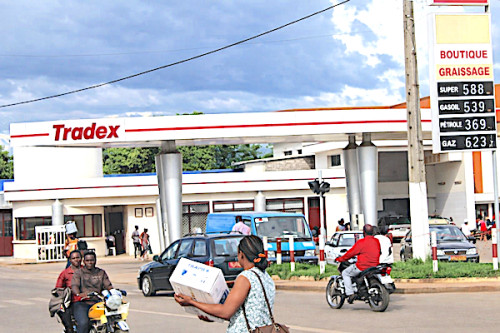
The Cameroonian government is reverting to a proven supply mechanism, relying on international traders, while maintaining the CSPH's steering role in quota allocation. The main objective is to secure the domestic market, which is facing soaring global prices and low national stocks.
Specifically, the supply of the domestic market will be done through traders selected by the CSPH, who will provide shipments of petroleum products. Local marketers will then purchase these volumes on the basis of allocations, acquired through letters of credit. This system aims to ensure the stability of fuel supply for the country.
The current geopolitical situation, marked by tensions in the Middle East and disruptions to maritime traffic in the Strait of Hormuz, a strategic passage for global oil trade, has heightened concerns about energy supply chains. The escalation of tensions has pushed up oil prices, with Brent exceeding $100 a barrel on March 12, 2026, a first in more than two years.
Cameroon has opted for a fixed premium mechanism, a predetermined margin applied to the purchase of cargoes. While this mechanism may reduce marketers' room for maneuver to optimize their purchase costs, it offers the State better budgetary visibility by limiting the potential impact of price fluctuations on public finances.
This decision is also motivated by the low level of national stocks, with autonomy estimated at 38 days for super, 12 days for diesel and 11 days for Jet A1. By returning to this scheme, used after the fire at Sonara, Cameroon hopes to reduce its supply costs, as was the case in the past, with estimated savings of 150 billion FCFA per year.
This adjustment marks a pause in the liberalization of petroleum product imports, initiated in December 2023, and highlights Cameroon's vulnerability to geopolitical shocks. Although this measure aims to secure short-term supply, it could increase pressure on public finances, already strained by fuel subsidies. Seven years after the Sonara fire, the country remains dependent on imports and exposed to the vagaries of the global energy market.