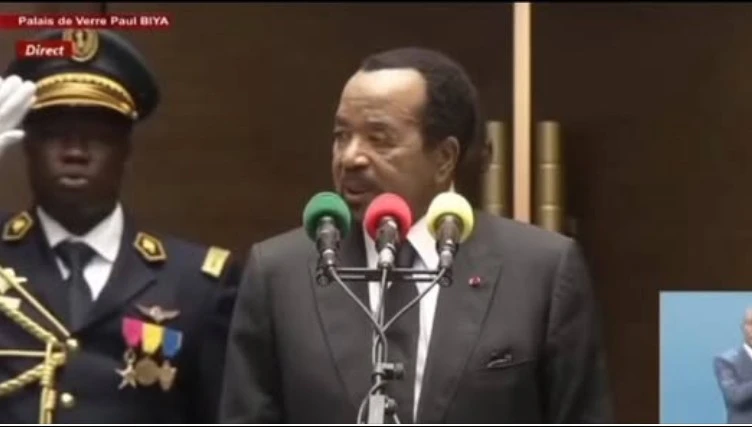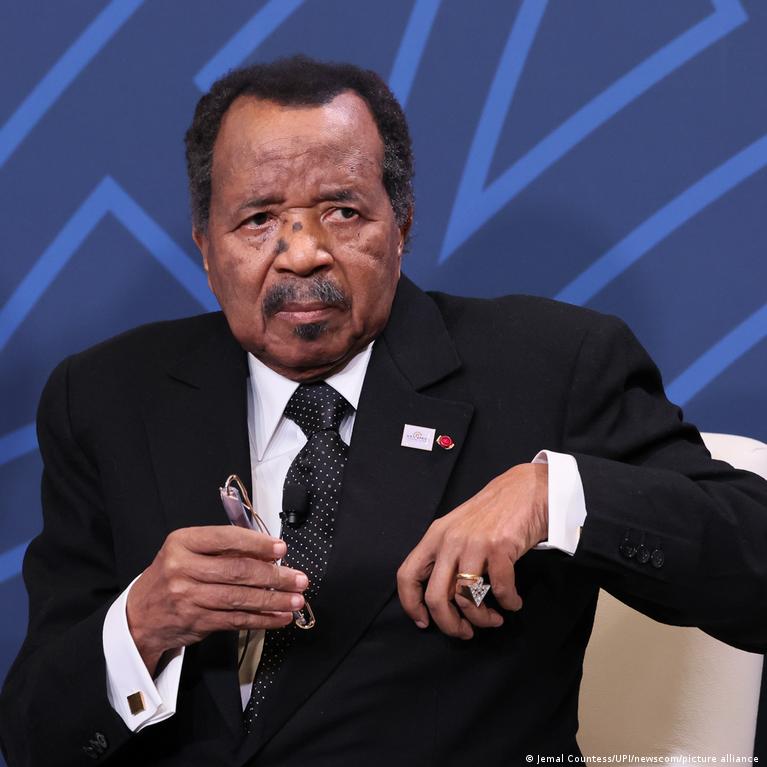
After nearly fifty years in power, President Paul Biya is under scrutiny for systematically neutralizing all checks and balances in Cameroon. The absence of a designated successor, the marginalization of any dissenting political ambition, and the transformation of the elite into a submissive caste have created a vacuum at the top of the state, leaving the country facing widespread paralysis.
A critical analysis of the Cameroonian regime describes a system where the president has reigned without ever preparing a successor, or even a second-in-command capable of taking over. This power vacuum translates into a lack of initiative in the higher echelons of the administration. Ministers and senior officials, accustomed to submission, hesitate to make decisions without consulting a leader who has become distant, more concerned with his health than with current affairs. This situation is exacerbated by the aging of President Biya, who is 93 years old, and uncertainties about his succession.
Cameroonian governance is described as self-consuming, a system that, in order to maintain itself, destroys its own replacement mechanisms. Since 1982, Paul Biya is said to have implemented a strategy to divide and neutralize any figure likely to represent an alternative. The institutions supposed to counterbalance power – Parliament, the judiciary, civil society – have been progressively weakened. The political elite resulting from this system has lost all capacity for initiative, resulting in a paralyzed administration, composed of incompetent executives, indifferent to major issues and concerned only with their own survival.
This mechanism is based on the elimination of potential rivals, the criminalization of presidential ambition, and the hyper-centralization of decisions. The absence of a vice-president, despite constitutional provisions, is seen as a strategy for maintaining power. Faced with the physical incapacity of the head of state, power is dispersed, with decisions being taken in informal circles, without coordination or overall vision. The question of succession remains a source of concern, with the risk of a transfer of power without popular consultation, thus perpetuating incompetence.
In the short term, this situation leads to a paralysis of reforms and a worsening of security and economic crises, particularly in the Anglophone and northern regions. In the long term, political transition becomes a crucial issue. A non-democratic succession could plunge Cameroon into lasting instability, where internal struggles within the elite would take precedence over the national interest. History will judge whether the price of preserving power will have been the collapse of institutions, and whether it is still possible to avoid the announced shipwreck.