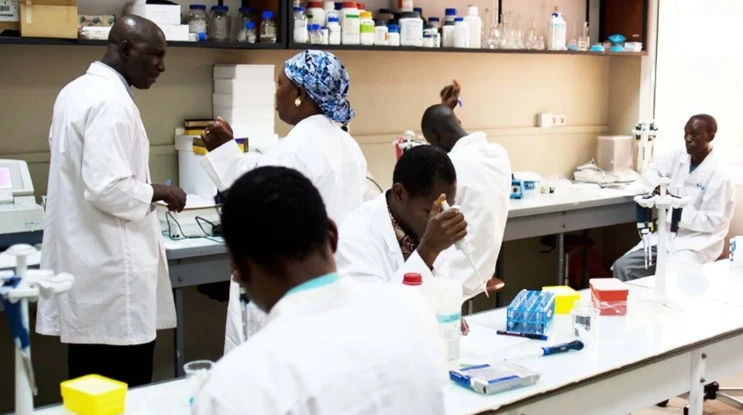
Cameroon is losing a significant portion of its doctors after their training, an alarming phenomenon highlighted by Dr. Roger Etoa, a member of the National Medical Council of Cameroon. According to his statements on a television program, 55% of doctors trained in Cameroon disappear from sight within five years of graduating. This situation raises the question of whether Cameroon is training doctors only to offer them to other countries.
There are many reasons for this "disappearance." Nearly 10% of young doctors are unemployed, while others are forced to turn to informal activities to survive, such as "benskine" (motorcycle taxi) or livestock farming. Emigration abroad is another major cause, with more than 5,000 Cameroonian doctors practicing outside the country, compared to only 4,000 who have remained in Cameroon. This phenomenon is fueled by difficult working conditions and paltry salaries.
The salary issue is particularly worrying. The average salary of a doctor five years after training ranges between 200,000 and 300,000 FCFA. However, extreme cases reveal salaries of only 50,000 FCFA per month, barely the salary of a qualified laborer. Even in the public service, a tenured doctor receives only about 175,000 FCFA. These figures are well below the 500,000 FCFA per month that the association "Médecins du Cameroun" is demanding to ensure a decent standard of living. In comparison, a secondary school teacher earns approximately 226,000 FCFA after five years of training.
Faced with this situation, the National Medical Council of Cameroon is raising the alarm and calling for an urgent salary increase, as well as the opening of new medical schools in the country. Improving working conditions, with access to essential equipment and medicines, is also crucial to retain doctors in Cameroon. The Cameroonian government recruits fewer than 100 doctors per year due to financial constraints, and private hospitals cannot absorb all graduates.
The brain drain in the health sector has disastrous consequences for Cameroon, with the doctor-to-patient ratio falling to one doctor per 50,000 inhabitants, while the World Health Organization recommends one doctor per 10,000. This shortage of medical personnel undermines the country's ability to combat infant mortality, infectious diseases and provide essential health services.